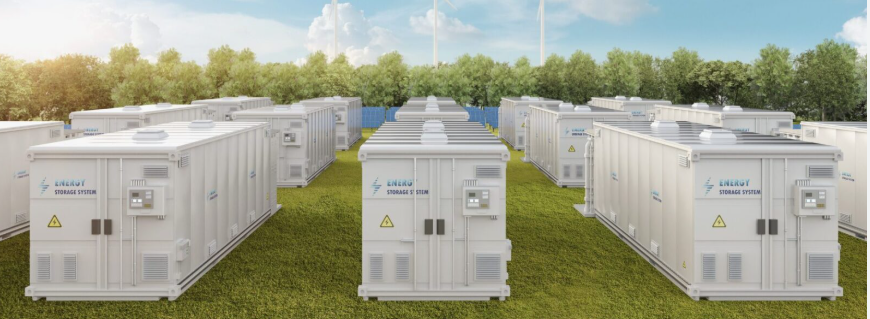

As the global transition to clean energy accelerates, battery energy storage systems (BESS) are emerging as a critical component of modern solar power infrastructure. By storing excess solar energy and releasing it when the sun isn’t shining, batteries help overcome the biggest challenge facing solar energy—its intermittency.
However, integrating batteries into solar power plants, particularly at a commercial or utility scale, is far more complex than it appears. While the technology is promising, developers and operators face significant technical, economic, and operational challenges in achieving seamless integration.
The Core Challenge: Complexity in Integration
Battery storage is not simply an “add-on” to a solar plant. It is a sophisticated, active component that must be integrated carefully into the electrical, mechanical, and control systems of the entire plant. Challenges arise in several key areas:
1. High Capital and Operating Costs
Adding a BESS can double or triple the capital cost of a solar project, depending on storage size and duration. This financial burden is a barrier, especially in markets with uncertain revenue streams or low electricity tariffs. In addition, batteries degrade over time, which means operators must factor in replacement and maintenance costs over the system’s life cycle.
2. System Design Complexity
Batteries must be sized appropriately to match the plant’s output and expected load profiles. Oversizing leads to high costs, while undersizing limits functionality. Integration involves:
- DC-coupling or AC-coupling decisions
- Inverter compatibility
- Safety design (thermal management, fire protection)
- Compliance with local grid codes
A poorly designed system can result in inefficient energy usage, limited dispatchability, or operational hazards.
3. Grid Synchronization and Control Coordination
When a solar + storage system connects to the grid, it must operate in perfect coordination with utility signals, frequency requirements, and reactive power demands. This becomes increasingly complex when multiple components (PV inverters, battery inverters, gensets) are interacting.
Without centralized control and precise real-time communication, the plant risks overcharging, over-discharging, or tripping due to instability.
4. Thermal and Environmental Management
Batteries, especially lithium-ion, are highly sensitive to temperature variations. High heat reduces battery lifespan, while cold weather reduces efficiency. This necessitates climate-controlled enclosures and thermal management systems, which further increase cost and complexity.
The Role of the Battery Management System (BMS)
A Battery Management System (BMS) is the internal intelligence of every battery bank. It monitors and protects the battery cells to ensure safe and optimal operation.
Key Functions of the BMS:
- Monitors state-of-charge (SOC) and state-of-health (SOH) for each cell or module
- Prevents overcharging or deep discharging, which can degrade battery life
- Manages cell balancing, ensuring all cells operate uniformly
- Monitors temperature and triggers cooling or safety mechanisms
- Supports communication protocols (Modbus, CAN, etc.) to connect with higher-level controllers
Without a well-functioning BMS, battery integration is unsafe and inefficient. The BMS is essential for protecting the investment and maintaining system performance.
The Role of Battery Controllers in Plant Integration
While the BMS governs internal battery health, battery controllers oversee how the battery interacts with the rest of the solar plant and the grid. Think of them as the plant’s “energy traffic controllers.”
Functions of Battery Controllers:
- Communicate with inverters and plant SCADA systems to coordinate energy flow
- Schedule charging and discharging based on time-of-use pricing, solar production forecasts, and grid demand
- Manage grid-forming or grid-following capabilities
- Provide ancillary services like frequency response, peak shaving, and black start
- Enable seamless islanding and grid reconnection when used in microgrids
Battery controllers also interface with power plant controllers (like ComAp’s Hybrid Controllers or InteliSys solutions), ensuring that energy flows are optimized across all assets—PV, battery, grid, and diesel generators, if present.
Why This Matters for Solar Developers
Without proper integration between the battery hardware, the BMS, the battery controller, and the plant-wide control system, solar + storage projects can suffer from:
- Energy losses due to poor scheduling
- Premature battery degradation
- Grid compliance failures
- Missed revenue opportunities from energy arbitrage or ancillary services
For solar developers, investing in high-quality battery integration is not just about performance—it’s about reliability, lifespan, and long-term financial viability.
Final Thoughts
As the world races toward net-zero, batteries are becoming an essential piece of the puzzle. But integrating a battery into a solar plant is not plug-and-play. It requires careful engineering, intelligent controls, and reliable communication between the battery, the plant, and the grid.
Battery Management Systems ensure the safety and health of the battery, while battery controllers enable smart operation within a broader energy ecosystem. Together, they form the brain and nervous system of a successful solar + storage plant.
To unlock the full value of battery storage, developers must take integration seriously—selecting the right technology, partners, and design strategies that ensure flexibility, scalability, and compliance.
Would you like this article turned into a white paper or slide deck for investor presentations or customer education?