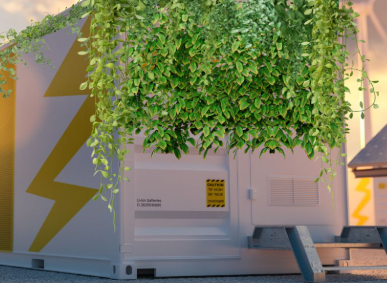

Hybrid energy systems—where diesel generators are paired with battery storage—are becoming increasingly popular in remote locations, mining operations, island grids, and telecom sites. The goal is to reduce fuel consumption, cut emissions, and improve power quality. But while the concept is simple, the integration of batteries with diesel gensets is technically complex and fraught with challenges.
In this article, we explore the key integration challenges and what it takes to make diesel + battery systems work effectively.
Why Combine Diesel Generators with Batteries?
Before diving into the challenges, let’s understand the motivation behind these hybrid systems.
- Fuel savings: Batteries supply power during low-load periods, reducing diesel runtime.
- Lower emissions: Less fuel burned = fewer greenhouse gases.
- Better load management: Batteries respond faster to load changes than diesel gensets.
- Smoother power delivery: Batteries eliminate voltage and frequency dips when loads fluctuate.
- Support for renewables: Batteries act as a buffer for solar/wind integration into the microgrid.
But achieving these benefits depends on flawless integration. That’s where the problems begin.
Key Challenges in Diesel-Battery Integration
1. Load Management and Synchronization
Diesel generators are designed to run within a certain load range (typically 30% to 80%). When the load falls below that threshold and the battery is still contributing power, the genset risks underloading, which causes a phenomenon called wet stacking—the buildup of unburned fuel and soot that can damage the engine.
On the other hand, batteries must be synchronized with the diesel generator output in terms of frequency, voltage, and phase—especially in systems where both operate in parallel. If not properly coordinated, this can lead to power instability, load imbalance, or even trips and equipment failure.
2. System Control Complexity
At the heart of any diesel-battery hybrid system is the control strategy—the logic that decides when the genset runs, when the battery charges or discharges, and how the load is shared.
A few common issues:
- Controllers must switch modes (grid-forming or grid-following) based on real-time demand.
- The system must prevent reverse power flow from the battery to the diesel alternator.
- If a renewable source (like solar) is also involved, the control logic becomes even more complex.
Only advanced hybrid controllers (e.g., ComAp’s InteliGen, Hybrid Control, or DSE’s hybrid modules) can manage this properly.
3. Battery Charging Strategy
Diesel generators are not designed to charge batteries efficiently. They operate best at steady-state loads, not the variable charging profiles that batteries need.
Problems arise when:
- Charging current is too high or too low
- The genset is forced to run at inefficient load points
- Charging is not optimized for battery health (State of Charge and Depth of Discharge not managed properly)
Improper charging can reduce battery lifespan and increase fuel consumption—defeating the purpose of the hybrid setup.
4. Communication and Compatibility
Batteries come with their own Battery Management Systems (BMS), which must communicate with the genset controller and the site’s SCADA or EMS (Energy Management System).
Challenges include:
- Protocol mismatch (CAN, Modbus, RS485)
- Delays in real-time data exchange
- Lack of interoperability between different brands or models
- Difficulty integrating legacy diesel systems with modern battery inverters
Without seamless communication, there is a high risk of misoperation or safety hazards.
5. Protection and Safety Coordination
Both diesel gensets and batteries come with their own protection requirements (overcurrent, overvoltage, short circuit, etc.). When combined, the system must be designed to handle faults in both directions—from the battery to the generator and vice versa.
Protection systems must also:
- Prevent overcharging or deep discharging of batteries
- Isolate faults in one component without shutting down the entire system
- Meet safety and compliance standards (UL, IEC, NFPA, etc.)
6. Thermal and Environmental Considerations
Diesel generators generate significant heat, while batteries—especially lithium-ion—are sensitive to high temperatures. Placing batteries too close to the generator or inside an uncooled enclosure can accelerate battery degradation or pose fire risks.
Site layout, ventilation, and thermal zoning are critical in system design.
7. Economic and Operational Trade-Offs
While hybrid systems promise long-term savings, they have high initial costs. The batteries, controllers, and integration equipment add to the system CapEx. Without a clear operational strategy, the economic return may not justify the complexity.
Additional challenges include:
- Battery degradation over time
- Fuel delivery logistics
- Maintenance scheduling for both genset and batteries
- Skills gap for local operators to manage advanced control systems
What’s Needed for Successful Integration?
To overcome these challenges, the following best practices should be followed:
- Use hybrid-ready controllers: Intelligent control systems from providers like ComAp or DSE can manage load sharing, synchronization, and communication between diesel and battery systems.
- Optimize battery size and charging profile: Avoid over-sizing batteries and ensure they are charged under optimal load conditions.
- Design for load variability: Use predictive algorithms and automation to manage transitions smoothly.
- Ensure robust communication protocols: Make sure BMS, inverters, and genset controllers speak the same language.
- Invest in operator training: Equip local technicians with knowledge on hybrid system maintenance and troubleshooting.
Final Thoughts
Integrating battery storage with diesel generators offers huge potential to improve energy efficiency, lower emissions, and reduce fuel dependency—especially in off-grid and mission-critical sites. But these benefits can only be realized through careful engineering, proper control systems, and robust coordination.
The key is to treat batteries and generators not as separate components, but as interdependent assets within a smart, well-managed energy ecosystem.