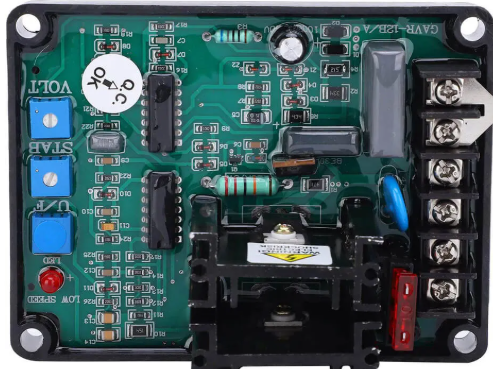

Modern generator excitation systems are crucial for maintaining stable voltage output in synchronous generators, especially as load demand changes. These systems regulate the generator's field current, which directly affects the terminal voltage of the generator. Here's how they work:
Basic Principle
Synchronous generators produce electricity by rotating a magnetic field (from the rotor) inside stator windings. The strength of the magnetic field—and therefore the output voltage—is controlled by the field current supplied to the rotor. The excitation system manages this field current.
How Modern Excitation Systems Work
Modern excitation systems are typically automatic voltage regulators (AVRs) combined with either brushless or static excitation methods.
1. Voltage Sensing and Feedback
- The AVR continuously monitors the generator terminal voltage using voltage sensors.
- It compares the measured voltage to a preset reference voltage.
2. Error Detection
- If the output voltage drops (e.g., due to increased load), the AVR detects a negative error.
- Conversely, if the voltage rises, a positive error is detected.
3. Automatic Correction
- The AVR adjusts the excitation current accordingly:
- Increased excitation strengthens the rotor’s magnetic field, raising terminal voltage.
- Decreased excitation weakens the magnetic field, lowering terminal voltage.
- This feedback loop maintains the voltage within acceptable limits despite changing load.
Types of Excitation Systems
| Type | Description |
|---|---|
| Brushless Excitation | Uses a rotating exciter generator (AC) on the same shaft as the main generator; DC is rectified by rotating diodes and sent to the rotor. No brushes needed. |
| Static Excitation | Takes power from the generator terminals or auxiliary source; rectified and fed to the rotor through slip rings. Offers fast and precise voltage control. |
Additional Features in Modern Systems
- Power Factor and VAR Control: Maintains system stability by managing reactive power.
- Load Sharing: Works with other generators in parallel to evenly share load and maintain voltage.
- Limiters and Protection: Prevents overexcitation, underexcitation, and overheating.
- Remote and Digital Control: Many modern AVRs are digitally controlled and integrate with SCADA or generator controllers (e.g., ComAp, DEIF, DSE).
Example: Response to Load Increase
- Load increases → terminal voltage drops.
- AVR detects the drop → increases excitation.
- Rotor magnetic field strengthens → terminal voltage rises to desired level.
Summary
Modern excitation systems use fast-acting AVRs and either brushless or static technologies to:
- Sense voltage changes
- Adjust excitation current
- Maintain voltage stability under all load conditions
They are vital for generator performance, grid compliance, and equipment protection.