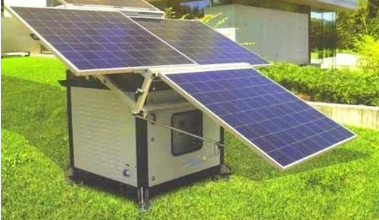

As energy users worldwide seek cleaner, more efficient power solutions, PV solar + diesel hybrid systems have gained popularity—especially in off-grid, remote, or unreliable-grid locations such as mines, islands, telecom sites, rural health facilities, and commercial buildings.
While combining PV solar and diesel generators offers fuel savings, lower emissions, and enhanced energy security, it also presents technical and operational challenges. Achieving seamless integration requires careful system design, intelligent control, and a solid understanding of both technologies.
Why Combine Solar with Diesel?
Solar power is abundant, renewable, and free at the point of use—but it’s intermittent. Diesel generators, on the other hand, offer dispatchable, controllable power regardless of weather or time. Combining them creates a hybrid system where:
- Solar reduces fuel consumption during the day
- Diesel takes over when solar is insufficient (clouds, evening, or night)
- Together, they ensure 24/7 energy availability
But this synergy doesn’t come without challenges.
Key Challenges in PV-Diesel Integration
1. Load and Power Balance Coordination
The biggest challenge is ensuring stable load sharing between solar and diesel. Unlike batteries, diesel gensets cannot respond instantly to changing loads or rapid solar output fluctuations due to cloud cover or shadows.
Without proper control, the system can:
- Overload the generator or inverter
- Cause frequency and voltage instability
- Trip the system due to rapid load/generation mismatch
Solution: Use hybrid controllers that monitor load and generation in real-time and dynamically adjust diesel output or solar curtailment as needed.
2. Reverse Power Risk
PV solar can generate more power than the load requires—especially during midday when solar output is high but load demand is low. If this excess energy is pushed toward a diesel generator that’s not properly controlled, it can cause reverse power flow, leading to:
- Generator damage
- Overheating of alternators
- Protection relay trips
Solution: Controllers must be configured to avoid reverse power by reducing genset output, turning it off, or limiting solar feed-in.
3. Diesel Generator Minimum Loading and Wet Stacking
Diesel gensets perform poorly when running at low loads (below 30–40%). Operating at light load due to high solar contribution causes wet stacking—a condition where unburned fuel accumulates, leading to:
- Engine fouling
- Higher maintenance costs
- Reduced lifespan
Solution: Either cycle the genset off during peak solar production or operate it at higher loads using smart load scheduling or battery storage as a buffer.
4. Lack of Synchronization Controls
For a diesel generator to work in parallel with a solar inverter, both must be synchronized in frequency, voltage, and phase. Most standard gensets and inverters cannot automatically perform this without:
- Advanced hybrid controllers
- Properly configured AVRs, governors, and inverter settings
Solution: Use synchronization-capable genset controllers (e.g., ComAp InteliGen, InteliSys, DSE8000 series) with grid-forming or grid-following inverters.
5. Unpredictable Solar Generation
Solar PV is inherently intermittent and difficult to forecast accurately, especially in tropical or high-humidity areas where cloud cover can change rapidly.
Uncontrolled solar variability leads to:
- Diesel genset ramping issues
- Flickering lights and unstable voltages
- Generator overload during sudden drops in solar
Solution: Install solar forecasting tools, add battery storage, or implement curtailment strategies to stabilize output.
6. Communication and Integration Challenges
Solar inverters, diesel gensets, and hybrid controllers often come from different manufacturers. Incompatibility in communication protocols (e.g., Modbus, CANbus) can make system integration and remote monitoring difficult.
Solution: Choose open-architecture systems and hybrid-ready controllers that can interface with third-party equipment.
7. Energy Management Complexity
Deciding when to run the diesel, how much solar to allow, when to use or charge a battery (if included), and how to meet varying load demand requires advanced energy management strategies.
Without intelligent energy management:
- Fuel savings are minimal
- Battery cycling is inefficient
- System instability increases
Solution: Deploy centralized Energy Management Systems (EMS) with real-time decision-making capabilities.
8. Cost vs Complexity Trade-offs
While PV-diesel systems reduce long-term costs, the initial capital cost of integration equipment, controllers, inverters, and software can be high. Many developers underestimate the engineering effort required to create a well-functioning hybrid system.
Bonus Challenge: What About Battery Storage?
Adding batteries can improve system flexibility, absorb solar surplus, and reduce genset runtime—but they introduce another layer of complexity:
- Sizing, charging, thermal management
- Battery Management System (BMS) integration
- Cost and lifecycle planning
If not properly integrated, batteries can underperform or even damage the genset if reverse current is not controlled.
Final Thoughts
PV-diesel hybrid systems offer a smart pathway toward cleaner and more resilient energy—especially in locations where grid power is unreliable or unavailable. However, the integration is not plug-and-play.
The key to success lies in:
- Intelligent hybrid control systems
- Proper system design and sizing
- Seamless communication between components
- Real-time load and generation balancing
When done right, these systems significantly reduce fuel consumption, lower operating costs, and extend the life of diesel generators—all while reducing carbon footprints.