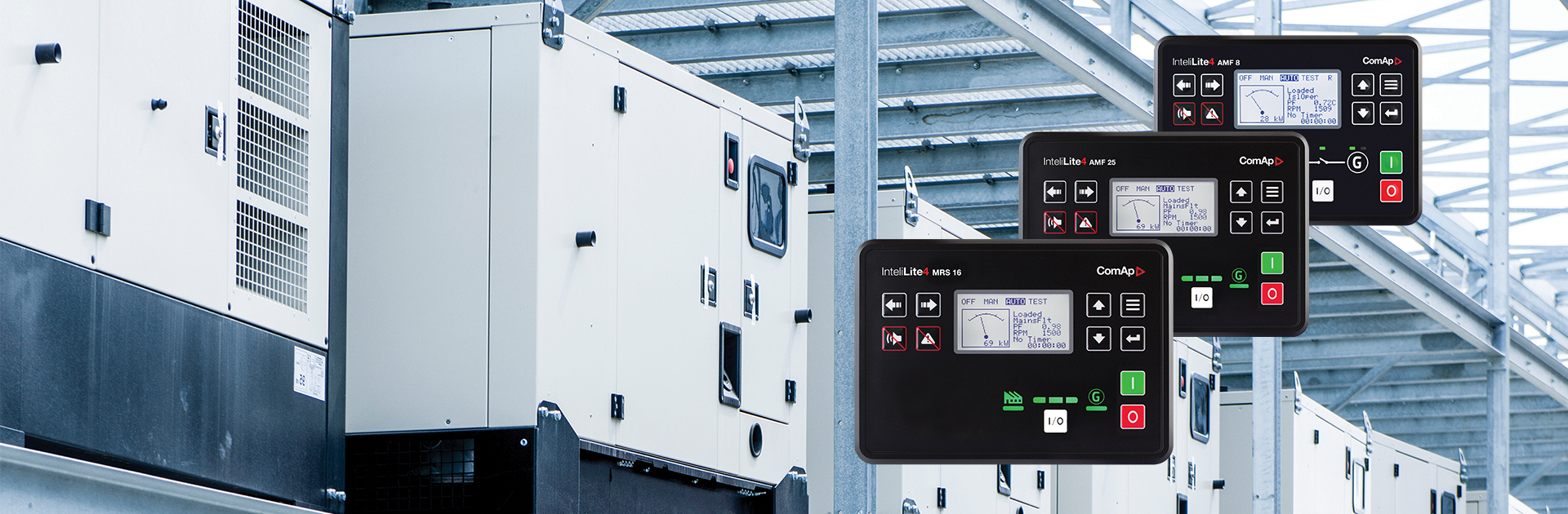

Benefits of Using Advanced Digital Controllers for Load Sharing
1. Accurate and Stable Load Sharing
Digital controllers ensure precise real (kW) and reactive (kVAR) power sharing among generators in parallel. They:
- Continuously monitor load conditions.
- Adjust speed and excitation automatically.
- Prevent overload or underload on any unit.
Benefit: Reduces the risk of generator shutdowns, overheating, or tripping due to unbalanced loads.
2. Automatic Synchronization
Digital controllers handle automatic synchronization of voltage, frequency, and phase angle before connecting gensets to a live busbar.
Benefit: Fast, safe, and seamless connection of additional generator sets—critical during peak demand or genset maintenance.
3. Integrated Power Management System (PMS)
Advanced controllers include embedded power management logic that automates:
- Generator start/stop based on load demand.
- Priority scheduling (e.g., run newer or more efficient units first).
- Load-dependent start/stop sequences.
Benefit: Optimized fuel consumption, reduced maintenance, and better system lifespan.
4. Remote Monitoring and Control
Modern digital controllers offer remote access via:
- Modbus/TCP, SNMP, or CANbus protocols.
- Cloud platforms or SCADA systems.
- Mobile apps or browser interfaces.
Benefit: Enables real-time diagnostics, alarms, and control actions from anywhere—ideal for remote or unmanned sites.
5. Advanced Droop and Isochronous Control
Digital controllers can:
- Simulate and manage droop characteristics with higher accuracy.
- Switch between droop mode and isochronous mode as needed (e.g., island vs grid-tied modes).
- Implement load sharing lines or digital communication for tight control.
Benefit: Smooth, flexible response in both standalone and grid-connected applications.
6. Built-in Protection Functions
Controllers often come with protections such as:
- Over/under frequency, voltage, and current.
- Reverse power, overload, phase imbalance.
- Engine protections (oil pressure, coolant temp, etc.)
Benefit: Eliminates need for external relays and reduces wiring complexity, while ensuring system safety.
7. Data Logging and Event History
Advanced controllers maintain:
- Historical performance logs.
- Load profiles and operational trends.
- Alarm and event histories.
Benefit: Supports preventive maintenance, troubleshooting, and compliance with reporting requirements (e.g., for critical infrastructure or insurance).
8. Scalability and Interoperability
You can easily:
- Add more generator sets to an existing system.
- Interface with utility grids or renewable energy sources (solar, battery, etc.).
- Integrate with third-party energy management systems.
Benefit: Future-proof architecture that grows with your energy needs.
9. Simplified Commissioning and Maintenance
Digital controllers offer:
- Graphical configuration software.
- Auto-tuning of PID loops.
- Real-time simulation/testing features.
Benefit: Reduces commissioning time, human error, and simplifies maintenance through user-friendly interfaces.
Real-World Example:
A hospital running 4 diesel gensets uses ComAp IntelliGen controllers. During a utility outage:
- Two gensets start automatically and synchronize within seconds.
- If load increases past 70%, a third genset starts automatically.
- Remote alerts notify the maintenance team.
- When load drops, gensets shut down in order, ensuring efficiency.
In Summary:
| Feature | Benefit |
|---|---|
| Precise Load Sharing | Balanced power delivery, avoids tripping. |
| Automatic Sync | Fast, safe connection of gensets. |
| PMS Integration | Smart load control and fuel savings. |
| Remote Access | Real-time monitoring and diagnostics. |
| Built-in Protections | Safety without extra hardware. |
| Data Logging | Better maintenance and analysis. |
| Scalability | Easily expand your system. |